


- blog
Swollen floor, termite infestation! Warning signs of laminate flooring and how to fix it permanently without demolishing the entire house.
- By King SPC
problem Termites Eat the wooden floor. and Water-swelled floor It's a silent threat that's often discovered too late. For homes with laminate flooring, if you start noticing blisters or wood splinters along the baseboards, this article will help you check for 5 warning signs and compare solutions to clearly show why... Renovating the floor of a house. With new materials like SPC, it's more cost-effective than traditional repairs.
Choose to read
5 Warning Signs: Your Laminate Flooring is Being Damaged
- The floor is abnormally swollen or sunken: The wooden planks are warped, causing tripping hazards, or they sink in when stepped on.
- It makes a hollow, hollow sound when walking. When tapped, the sound isn't solid, like there's a hollow space underneath.
- Fine wood powder was found. I found brown, powdery flakes resembling sawdust or sand around the baseboards or seams.
- Bulges/cracks: The wood grain film surface is starting to peel or crack.
- Mud Tubes: Termite-built tunnels can be found along wall edges or in room corners.
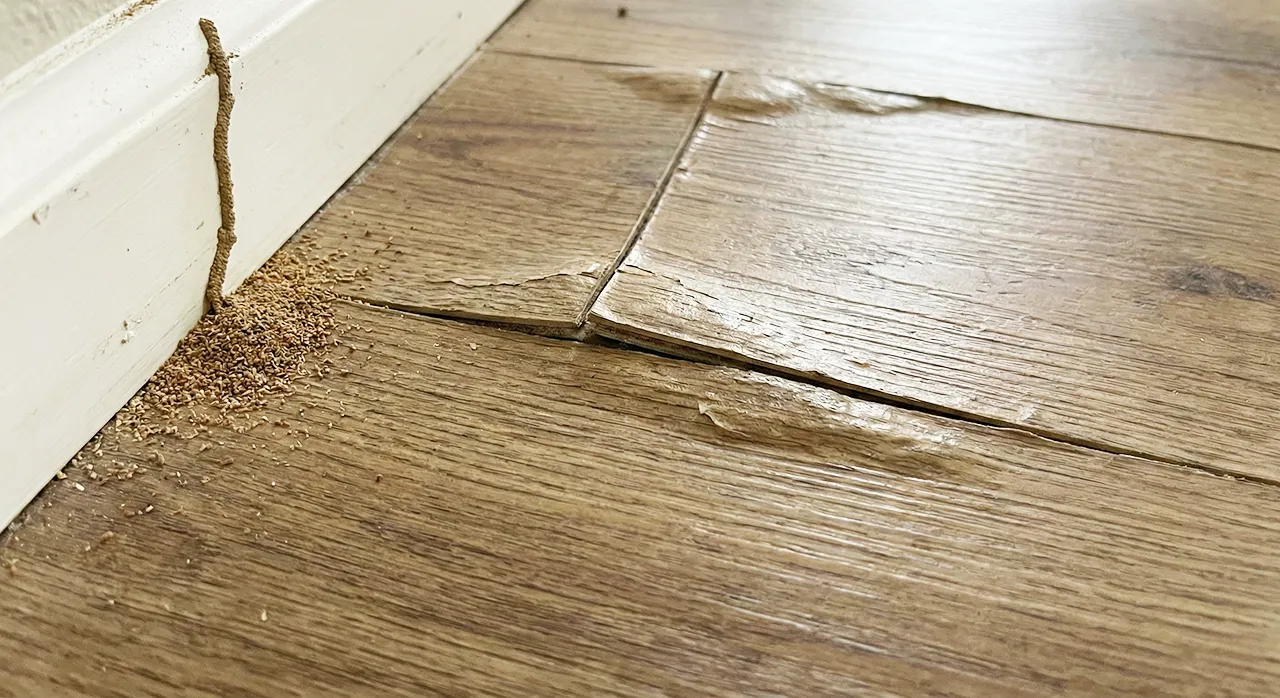
Double check: Water-swelled floors VS Termite-eaten wooden floors – what's the difference?
Although the result is the same damaged floor, the causes are different. This table will help you clearly distinguish the symptoms.
Symptoms | The floor swelled due to water/moisture. | The floor is infested with termites. |
Swelling characteristics | Swelling or bulging along the seams (edges of the sheet). | It has collapsed or the surface is so thin that it indents when pressed. |
Sound when tapped | The sound is solid and normal (but the floor is convex). | Hollow sound (The inside was completely eaten.) |
clue | There may be water stains or black mold. | There is wood powder/termite droppings. Or a dirt path. |
Main cause | HDF wood absorbs water and expands. | Worker termites eat away at the wood from the inside. |
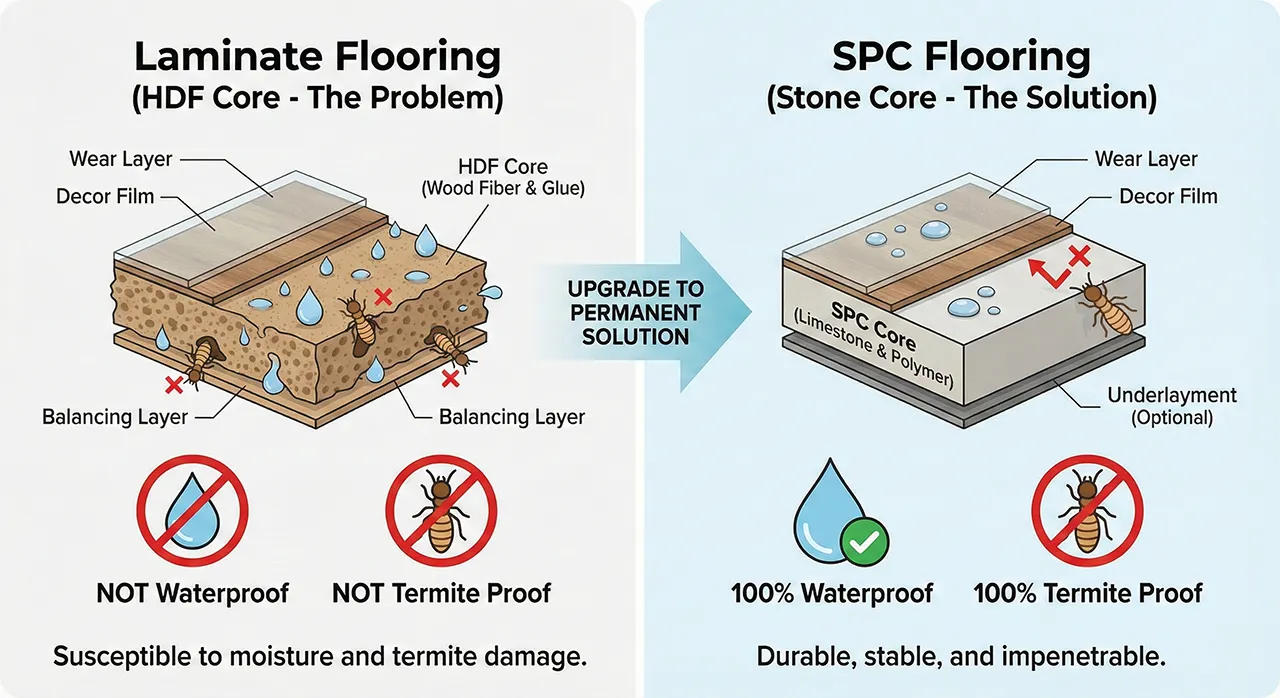
Why do original laminate flooring "fail"?
The main reason why laminate flooring becomes a favorite meal for termites is because the core is made of... High-density plywood (HDF) This is compressed wood powder mixed with glue. When exposed to moisture, the glue deteriorates and the wood softens, making it an easy target for termites to bore into and cause damage. Once damaged, ""Cannot be repaired or restored to its original condition.""
Solution options: Spot repair VS Switch to King SPC.
Many people try to solve the problem by repairing only the affected area, but statistics show that the same problem often recurs within 3-6 months. This cost-effectiveness comparison chart will help you make an easier decision:
Comparison Topic | Repair existing laminate flooring (spot only). | Renovate your space with King SPC (recommended). |
Termite prevention | High risk (The termites move on to feed on another spot.) | Termite repellent 100% (The material contains no wood.) |
Waterproof | Not waterproof (can swell again). | Waterproof 100% (No swelling, no blistering) |
beauty | The new base color may not be the same as the original (color variation). | Beautiful and seamless, with realistic wood grain. |
Difficulty | It's hard to find a mechanic (they won't take on small jobs). | Quick installation, job completed in 1-2 days. |
Value for money | Paying small amounts repeatedly (never-ending payments). | Painful but worth it (a one-time investment for long-term gain) |
Compare SPC with traditional materials. or How is SPC flooring better?
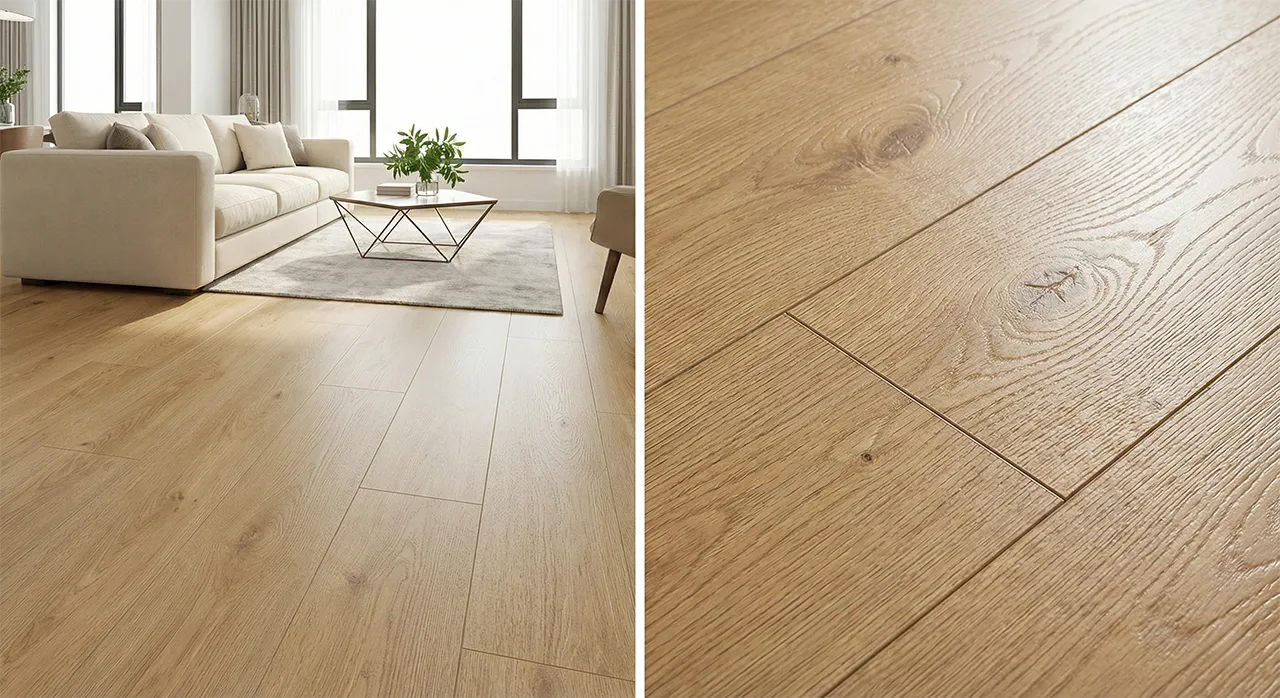
Permanent solution: Renovate the flooring with King SPC vinyl tiles.
To break the cycle of the problem. ""Repaired again and again."" Replacing the flooring material with new one. King SPC (Stone Plastic Composite) It is currently the best answer, with properties that surpass laminate in every aspect:
- Zero Termite: Made from calcium carbonate (limestone) mixed with virgin grade plastic. Termites cannot eat or chew on 100%.
- 100% Waterproof: No more worries about water-damaged floors. You can comfortably mop the house with wet water or use it in the kitchen area.
- Click Lock System: Easy installation with a click-lock system. Can be laid directly over existing tiles or old laminate flooring can be quickly removed and replaced with new flooring, leaving no mess on site.
advice: If you encounter a problem with termites eating your laminate flooring... ""Don't try to fix just the spot."" Because termites are often spread throughout the room under the flooring, removing the old flooring, eliminating the termite nest, and replacing it with King SPC is the only way to permanently stop the problem.
Frequently Asked Questions (FAQ)
Q: If a floor is waterlogged and then dried, will it return to its original smooth state?
A: No, once laminate flooring absorbs water and swells, the HDF structure will permanently deform and cannot return to its original shape. The entire sheet must be replaced.
Q: Is switching from laminate to SPC significantly more expensive?
A: While SPC materials may be slightly more expensive than regular laminate flooring, their longer lifespan of over 10 years, without concerns about termites or swelling, makes them "much more worthwhile" in the long run.
Q: Do I need to eliminate termites before installing new flooring?
A: It is absolutely essential that, even though King SPC flooring is termite-resistant, termites may infest door frames or baseboards instead. Therefore, the old flooring should be removed, and the concrete floor thoroughly sprayed with termite treatment before starting the new installation.
Share this article:


